As we have seen, HTTP is a simple text-based protocol. Server-side
programming actually consists in running code between receiving the request
and sending the response.
We have seen that, in this case, some operations are generic enough
to be performed every time, such as:
Extracting the request headers
Retrieving the GET and POST parameters
Building the response headers
...
We would like to access the parts of the request in a form specific
to our programming language (for example, having the GET parameters
in a {} dictionary).
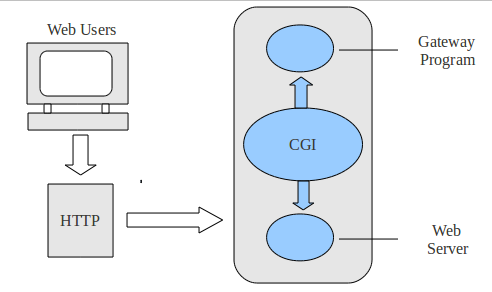
The "bridge" between HTTP and a language is called
"CGI".
Moreover, the work of building structures that represent the data of
the HTTP request and response is already done for you.
Thus, your server-side technology will have access to the request
data, and will be able to modify the response through an API that is
simpler than the HTTP protocol itself.
Note
Unlike HTML, JavaScript or CSS, the server-side language is
an arbitrary choice.
As a result, there are tons of server-side technologies.
Current landscape
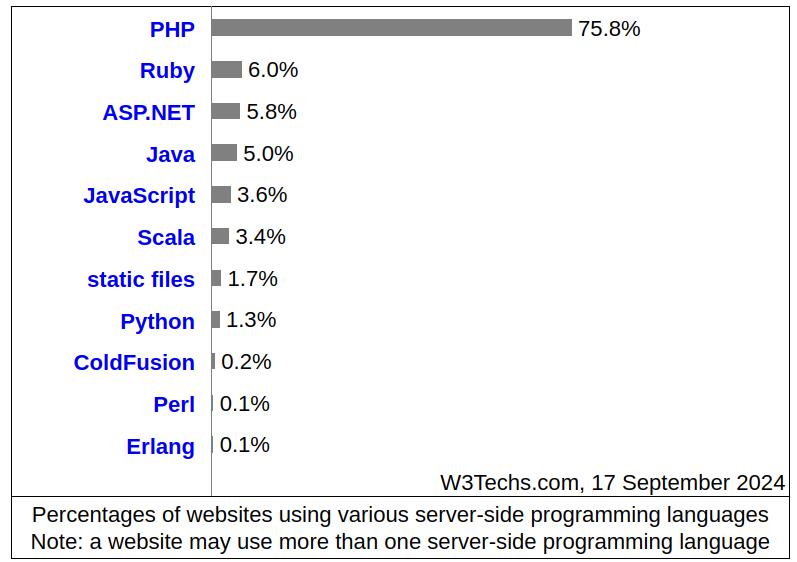
W3Tech.com publishes statistics on the usage of server-side
languages (when they are known):
According to it, PHP and ASP.NET are by far the two most
popular technologies.
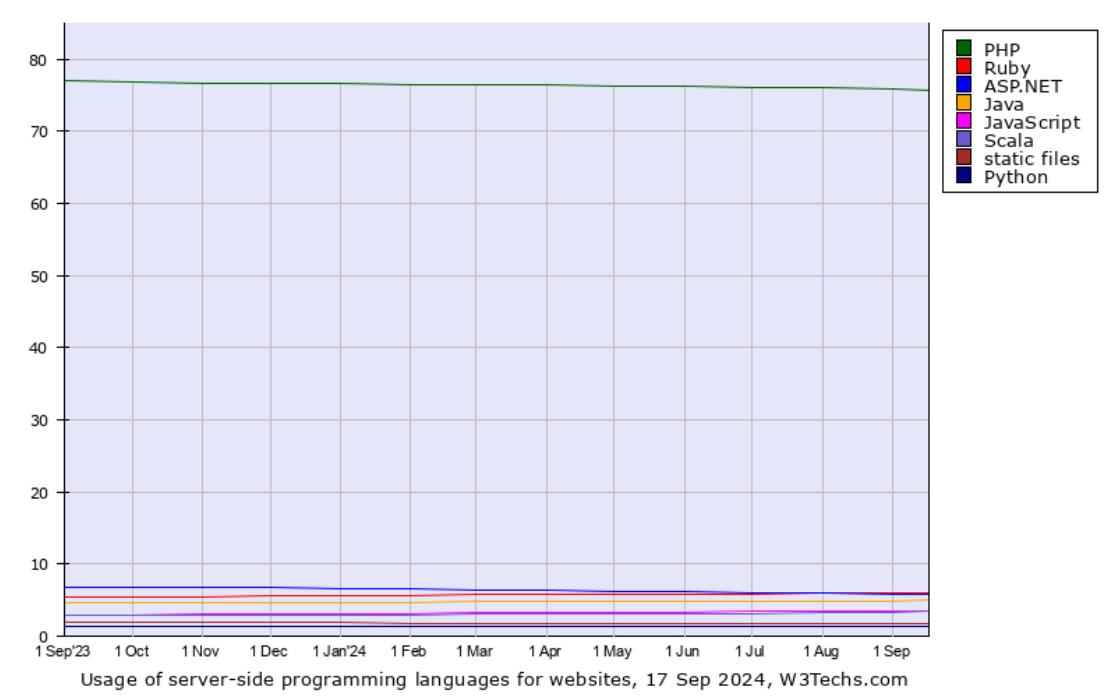
Statistics on trends over time are also available: